Bloodsport masquerading as Midwestern marriage.
For seven years and sixteen days, Marge and Jim Schmidt engaged in a silent-treatment cockfight, with every successive daily strikethrough on the couple’s laminated kitchen calendar representing a dark testament to stubbornness and stamina. Their married life has been a marathon of reserved, mild-mannered provocation, eking forward and building bitterness, a day at a time.
Today is the match and the oil rag to this life; the Schmidts’ routine will pause, then stop altogether. Their last day at 15 Midrock Drive.
* * *
Jim pulls his maroon, faux-ragtop Buick into the driveway in exactly the usual way. Mud from three days of rain is stuck like dirty chalk on the bottom edge of the sedan’s driver-side door. He relishes a moment of smug self-congratulation for choosing sensible footwear. The Schmidts have a garage, which is kept closed, without exception. Cars are of the outside world, and the grime of that life would never stain the pristine garage on Midrock. The truth, though the truth is only partially beginning to uncloud on this day, is that the couple never considered allowing an automatic garage door to expose their strained life with a pressed button.
Jim drops his keys in the brass owl tray on the refinished oak entryway table, as he had done for each of the 2,532 days he has lived in this house, but the clink of metal against metal echoes through the house, hollow and strange, different from all the other days. Jim glances down at the noisy keys, and the owl makes eye contact. He looks around, startled by a vacant feeling in the house, and his toes tingle with coursing adrenaline. The air is heavy and smells different also, damp and moldy, and this takes Jim back to the first days on Midrock and Marge’s early efforts to deodorize the home.
“First and foremost, we need to get the smell out of this house. Structures take on the owners.” Marge looked around, her nose indicating discomfort. “And the previous owners stunk!”
Marge wore faded Levi overalls in those first days. Jim had not seen those overalls in years, but the image of Marge standing in the hallway crashed onto Jim as a shudder. He thought she was adorable as she painted and cleaned in overalls when the house was still their house. When did Marge stop dressing playfully, wearing denim, and braiding her dark hair into ponytails?
Differences at Midrock hold tremendous importance for Jim today, who has always sailed through this house as its master, not noticing much, the supreme authority of all that was within his sheetrock box.
“Marge!” Jim had never called out to his wife in this manner upon entering, and the word felt odd coming from his own mouth, as if he was mouthing the chorus of a song that someone else was singing. “Marge?” This time, her name rolls around and bounces against the walls like an out-of-control foosball. Jim’s eyes alert to every visual stimulus, darting around, resting in strange corners.
Jim walks slowly and deliberately toward the kitchen, like a cat stalking a bird. His shoes inside his rubber galoshes squeak at the end of every step. Marge is not in the kitchen. On every other day, Marge would be standing by the turquoise Formica countertop, serving a hearty meal so that Jim could sit alone and finish his day with ample Midwestern nutrition. Hadn’t she always fed him? Fed him well even, never repeating a dish too soon out of laziness or lack of attention? That morning, he had consumed a scalding bowl of oatmeal with chopped walnuts and raspberries. Tomorrow, Marge would certainly vary his breakfast accordingly–maybe a warm prune Kolach or a Runza sandwich (Marge knows that Jim had always favored lunch over breakfast). Jim’s mind flashes back to his creamy breakfast mere nine hours earlier and he takes a strange comfort in realizing that the thick, olive-green pottery bowl was not still sitting where he left it, at the far end of the countertop. That he always (had he always?) left his dishes for Marge exactly where he ate was a small act, a quiet aggression that Jim relished twice a day. And it was not lost on Marge, who resisted the urge to hurl every bowl, plate, and coffee cup at the meticulously painted walls. Cooking, washing, sorting dishes was Marge’s world. Jim only had to shovel their contents and leave.
A scarlet-and-black Chadron High cardinal–a magnet from high school that Marge kept on the fridge door–stares at Jim with judgmental eyes and a menacing scowl. Jim is unexpectedly overwhelmed with emotion at the nostalgia of the mascot. Why had she kept it there all these years, and how had he never noticed the lonely affect of this bird? He recalls randomly that he had dreamt as a child of studying birds, of being a college professor at Chadron State. When was the last time Jim noticed a bird in Chadron? In college, Jim photographed the Bobolink for an art class project. Bobolinks nest in the damp marshes of Nebraska, and Jim had been oddly drawn to this bird species.
Marge had been delighted with this interest, perhaps thinking it would lead to time outdoors with her husband. “What lovely photographs, you are very talented!” Marge was blindly, irrationally supportive of Jim during those college days. The project had yielded a C, so Jim had little confidence in Marge’s artistic acumen.
“You should get some good equipment, take some photos we can hang at Midrock.” Marge beamed at the prospect of using Jim’s new interest to adorn their home.
Jim had felt proud at that moment, and Marge’s praise lingered in his thoughts for some time. “Just a class project, not a talent,” he had said. Marge had been staring intently into Jim’s eyes, but this comment broke the stare. They never spoke of Jim’s photography again.
The Bobolink is a small songbird with a disproportionately large head, which flutters and sings across the plains during mating season, then when back on land attracts female birds by lowering his wings, dipping his head, and offering a pleasing view of his bright yellow nape. In the non-mating season, the male Bobolink sheds his finery and morphs into his authentic self, drab-colored and unremarkable. Nebraska’s Bobolinks show out only to attract females during the breeding season, then slink away for the rest of the year unnoticed.
* * *
From the perspective of the folks in town–understanding that folks in this town speculate very little on matters that should remain private–Marge and Jim seemed an ideal match. They were high school sweethearts who had never lived more than five miles from the awkwardly designed 1970s red brick structure with boxy, chocolate-brown cedar shake eaves, where they sat at the same homeroom desk freshman year. Marge’s surname was Smith, so it was less fate than an alphabetical coincidence that landed the couple at the same spot at the same crucial moment of their young lives.
The two teenagers genially co-existed for fifteen minutes each morning in Mrs. Hoffman’s cinderblock classroom, beguilingly obstructed from a full view of each other by a giant, yellowed overhead projector that consumed most of the desktop real estate between them. The two enjoyed nearly a full semester of glances and silly shrugs in reaction to Mrs. Hoffman’s monotone school announcements, then they quietly came together in a profoundly sensible courtship that endured through all four years at Chadron High and culminated in a lackluster engagement the summer following graduation. Their parents, each set distracted by similar but unique challenges of large families and difficult economic times, took little notice of the budding relationship, as it read as unremarkable and likely short-lived. There was little in these years to suggest the intensity of what was to come for Jim and Marge.
Jim attended Chadron State College, the only local option for higher education, and Marge aspired only to stand beside and a little behind Jim as he pursued a degree in business. They married at St. Patrick’s Catholic Church on Cedar Road, just a quarter mile from the high school. Though surely, they understood that other choices were open to them at this juncture, neither overthought the decision, nor considered an alternative path. Jim was solid, and Marge was bred to value solidity.
Jim and Marge were both Chadron, Nebraska stock, likely distantly related, united by a shared desire to stay put on the same map pinpoint and by a vague naivety typical of those who are born in this region of the country. Their ancestors were homesteaders who were brought to Nebraska when the Fremont, Elkhorn, and Missouri Valley Railroad made it that far. Their people were several generations of hard-scrabble Midwesterners, who were as much a part of Chadron as the majestic ponderosa pine trees sheltering the town. The mature bark of the ponderosa pine turns a bright, rusty orange hue that commands attention, flakes off in a unique jigsaw pattern, and smells like butterscotch when warmed in the sun. And since this pine varietal for which the Great Plains region is known is sun-seeking, young Marge and Jim were ensconced in a warm and buttery world from birth.
Their history and the atmosphere of their childhood may have accounted for an unrealistic expectation of married life and an assumption that adulthood would be sweet and straightforward with little or no effort. That certainly seemed to be the reality for their parents, though the previous generation was known for leaning into the Midwestern let’s-not-call-attention approach to domestic difficulty. Marge was aware, without understanding this awareness, that certain information was not readily offered within the Smith family and anything of an intimate nature had to be discovered serendipitously. But any good Nebraska girl knew innately that it was best not to delve deeply into matters of the heart, that love should be a slow simmer.
* * *
The community outside their home had become increasingly invisible and inconsequential for the Schmidts. The front door at 15 Midrock Road had three rectangular windows placed at impossible-to-look-in-or-out positions and was painted in high gloss Marigold Orange. The colors at Midrock had been extensively researched, at first by both the Schmidts and, in the later years, by Marge alone. A Longaberger basket on the pantry shelf corralled hundreds of mid-century modern paint chips, arranged in a rainbow, and browsing the colors was as close as Marge had to a hobby. In the early years at Midrock, the couple made color choices together; now paint chips were the stuff of Marge’s fantasy life.
Jim passed the threshold of their home at 7:30 am and 5:30 pm every weekday. During his time away from home, he interacted with the world enough for both he and Marge, as a Senior Accountant at Chadron State College. The commute to and from CSC was crucial for Jim and his favorite part of the day, the part alone in his car. Jim righted himself from the mounting anxiety and discontent on the way to work and then on the way home. The only possible variance could be a touch of traffic along East 10th Street, which could add 3-6 minutes to his travel time, but this was rare. Chadron was part of the state that was called “The American Outback,” because of the lack of population and geographical change. A drive from Alliance to Chadron looks essentially the same as it did a hundred years ago.
Marge was not afforded any such transitions in life.
Together, time in the evening was difficult. Their daily routine was a slow drip of hatred that was more deeply entrenched with every latch and unlatch of the front door. Jim hated the smell of Marge: floral, musty, and old-fashioned, like an incontinent grandma who overuses Pond’s cold cream. Jim left a room to avoid her smell. Eventually, leaving the room was unnecessary. Jim and Marge made sure they never found themselves in the same room for very long.
“I need some space to decompress,” Jim told Marge when explanations were still an expectation. That Jim (ever-so-slightly) flared his nostrils when in her presence was not lost on Marge. She would not acknowledge this slight, and thus the seesaw of hurt and feigned ignorance began in earnest.
Marge was incensed and transported with rage by Jim’s presence, and as years passed, she focused on his habits at home, protecting her hatred, swaddling it close like a newborn. Jim’s habit of scrunching receipts and leaving them on surfaces in the house was her ultimate infuriation. The focus of her life was an ordered home. These papers were a pileup of resentments. Marge had experimented–Just how long would it take him to give in and throw them in the trash? Sometimes he placed them so close to the trash can that a strong wind through the house would have blown them directly into the wastebasket. The balls of paper were teetering on the edge of the bureau above the trash. It became her obsession, and the reason for all that was dark and terrible at Midrock.
Marge spent a lot of time stewing about when this habit had started. Certainly, it would not have enraged her in the early years. It was well into the third or fourth year of their marriage when she confronted him. “Could you throw these out? It is just as easy as leaving them around the house,” Marge extended Jim an open palm with a receipt from China House. She had never been to China House.
“In the time you ask me to do it, you could just do it. That would be just as easy,” Jim continued to stare at The Chadron Record. He folded the newspaper so that he could read a quarter-page in one hand, while holding his coffee cup in the other.
Her experiment was a debilitating failure. Jim would never discard a scrunched receipt. Did he even see them? Communication was not a strong point on 15 Midland Drive, so this was a mystery that endured. A mystery that lasted well beyond this marriage.
Spite. It was unadulterated spite that motivated Jim. He saved his receipts and balled them up on the countertop, the mantle, the bedside table. Sometimes he made purchases just so he would have more receipts. He had photo-copied receipts at work and cut them out from the standard 8 x 10 paper size at his office. Once, he had spent an hour doing this, so he would have a stash. It was mean, it was satisfying.
This morning, February 13th, feels like any other chilly Nebraska beginning, at least to Jim. He had subsisted on a diet of focused work outside the walls of Midrock Road and anger and resentment on the inside. He assumed that Marge lived in a similar dichotomy, and that daytime hours were her respite from the seething anger that was the third wheel in their shared time. Jim did not know what Marge did during the day.
* * *
The journey to the living room exhausts Jim and is an outrageously long voyage. Jim walks as slowly as he ever has, without an awareness of this pace change. Everything around him feels counterintuitive and holds unexpected layers of meaning. In the living room, sadness is the dominant vibe. The sofa presents as indignant. There is a footprint impression in the mustard-colored shag rug, and Jim takes a moment to process this print with the intensity of a forensic analysis studying a crime scene. Was this a crime scene? The imitation Eames lounge chair–now Jim recalls how much fun the couple had finding that at a garage sale the first year of their marriage– looks disgruntled, though the tweed lumbar cushion lies just as it always does, perfectly spaced dead-eye center of the seatback. The position of the matching ottoman would hold up to a placement measurement within an inch.
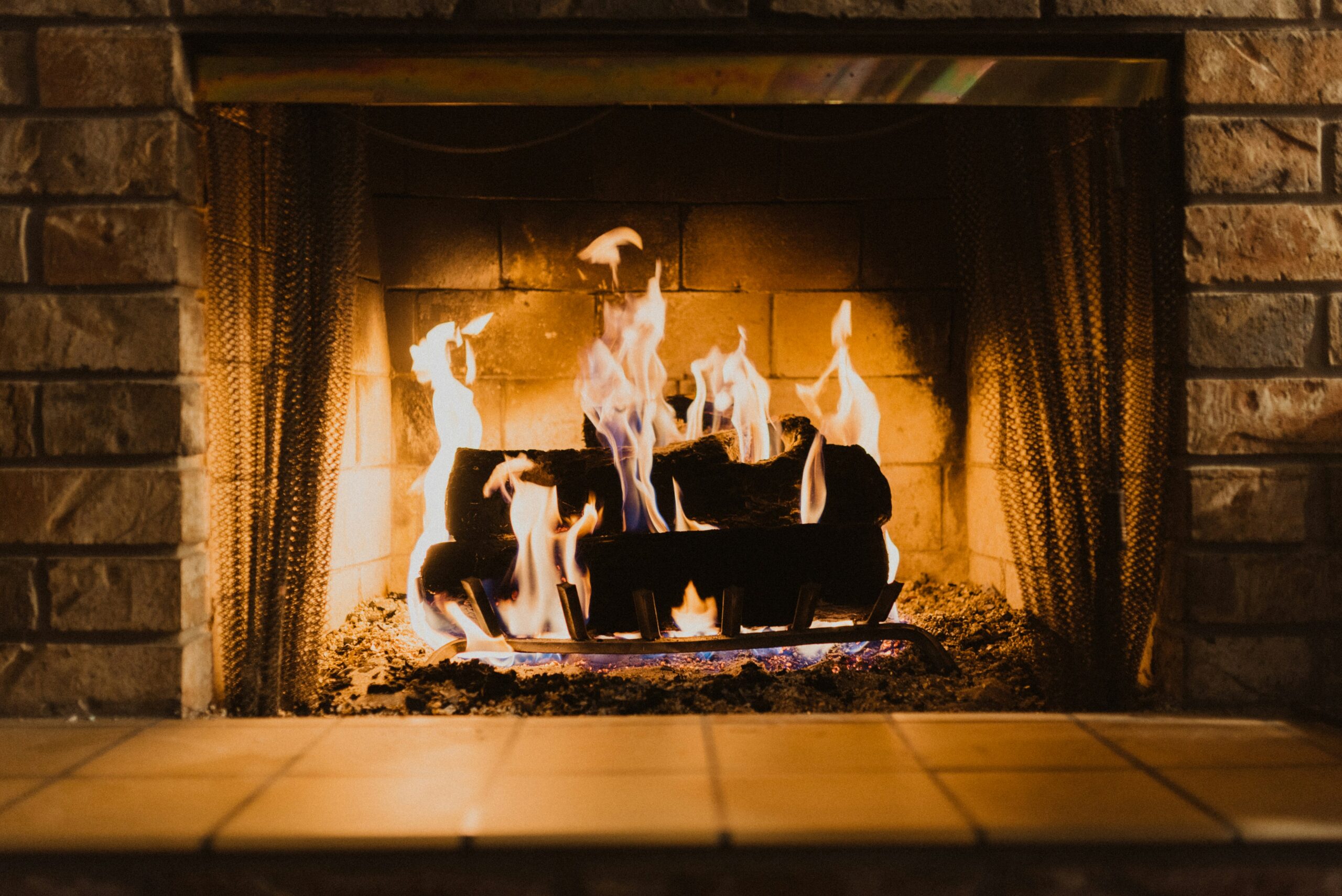
The fireplace catches Jim’s attention. The faux logs, painted to look charred, are covered with white balls of paper. Jim leans in cautiously and recognizes dozens, maybe hundreds, of receipts, tiny records of his purchases from his life before this evening. He leans in a little further and reads the words “Burger Boy.”
Time passes. Jim considers his new reality.
The burlwood grandfather clock in the hallway ticks, ticks, ticks.
A hopeful light radiates into the hallway from the bathroom. Jim peeks in carefully. There is moisture in the air, suggesting a not-so-distant shower and Jim experiences the tug of hopefulness and then, quickly, something else unfamiliar. Regret.
The bathroom trash astonishes Jim, and he leans over, but does not touch the contents: a Chick-fil-A waffle fry (he is so close he can smell the cold grease), a lipstick-blotted tissue, a remnant of torn silky fabric. Marge would have had to drive an hour from Chadron to get to Chick-Fil-A, and she rarely left the lot lines of the property. Jim started the engine of her silver Honda accord religiously on Saturday to engage the battery, not out of service to Marge, but because his father had taught him how to properly maintain a rarely driven car. Jim’s father had similarly started Jim’s mother’s Lincoln.
Today, Jim did not notice Marge’s car parked outside. He had stopped noticing.
“You don’t drive that far. You don’t do that,” Jim says, maybe to himself, maybe aloud.
Jim extends his hand toward the trash bin but does not touch anything at first. He focuses on and studies his fingers in front of him, white and clean and giant, as if disconnected from his body or belonging to someone else, then watches them diminish into Marge’s bathroom rubbish.
He picks up the tissue by its corner and examines the plum-colored, lipstick stain. How had he never seen this color, he considers, as he walks toward Marge’s room. He stuffs the tissue in his suit pocket like a pocket square and pats his chest, as if he has just put the finishing touches on his outfit for an important work meeting.
* * *
Chadron is known today for the achievements of its high school girls’ wrestling team, and for the annual Fur Trades Days, which honors the town’s origins as a hide-trading outpost for the French and other settlers in the 19th century, and residents tend to be calm and practical people who mind their own business. In the years ahead, very few Chadron residents will remember much about the Schmidts or their story, except occasionally when a newcomer notices the remains of a once-pristine home at the end of an overgrown lot on a cul de sac on the north end of Midrock Drive.
Until today, the Schmidts had seemed fine. In Chadron, fine was praiseworthy, as was ordinary. There was nothing notable about the couple, nothing that attracted attention from the neighbors and townspeople whose lives intersected and bumped into the Schmidts’ dreary days. Unlike the vast majority of other Chadronians their age, though, the Schmidt’s did not have children. Marge never complained or regretted this–at least she did not express regret to Jim or others; how she squared this within herself is unknown. If their lives had been scrutinized–had they lived elsewhere or functioned in a typical social circle in another town–oddities would have been noted. No close friends. No shedding dog to introduce a touch of charming chaos to Midrock. No spa day with girlfriends for Marge or golf outings at Ridgeview Country Club for Jim. No shopping trips to Rapid City, South Dakota with the other women in town. No newspapers piled at the front door. They had ceased to have regular contact with family a few years after they moved to Midrock Road.
The house was lovely from the street, the lawn tidy, the doors always closed.
“The moss Phlox is pretty, but English Ivy is invasive and not native.” Jane Dodge lived at the pristine white farmhouse at 17 Midrock, but could reside in South Carolina or Australia, considering how little she knew about her nearest neighbors. She had overstepped at the Chadron Garden Club tea party–and her comment was greeted with smiles and awkward silence.
Jim and Marge: low-lying, low maintenance, at once native and invasive.
* * *
In the bedroom, Jim remains immobile, rendered dormant, still wearing his overcoat, perfectly upright on Marge’s side of the bed, in a bulgy-eyed daze. It was Marge’s room, her bed, but she slept on one side exclusively, still honoring the concept of a shared bed in theory. Jim straightens his necktie and pulls at his collar. He stares straight ahead at the half-empty closet; the accordion door collapsed on one side to reveal emptiness. Marge’s smell still lingers, but a look around and Jim sees that a vague odor appears to be all that is left of his wife. He is suddenly smitten with the idea of her, and longs for her things to inhabit the house again, or even for a trace of her to appear.
“This is unreasonable,” Jim says aloud. What does reason have to do with anything is the silent response that lingers between his temples.
All of her things are gone. Did she ever own anything? Jim cannot remember a single personal item of Marge’s at this moment.
“Where is she?” Jim looks up at the popcorn ceiling for clues or understanding. “Where is my wife?” There is a circle of water damage underneath the molding above the bed, and it is comfortable for Jim to linger on it, his head drops back.
This was not a hasty exit; the wooden hangers were evidence of that, of the care Marge had taken to line them up and space them perfectly. Despite the misery clouding the air within the walls, Marge has kept order.
“He needs things to be organized and tidy to think straight,” was the only advice Jim’s mother had offered Marge on their wedding day.
* * *
They paid $162,055 for 15 Midrock in the Colonial Pine Hills neighborhood. It had been a stretch, financially, but Marge and Jim chose this house in perfect unison at the happiest moment of their lives. The mid-century vibe suited them. They were a retro couple. Marge would be home (even before she had given up on kids, housewife was a sacred concept with which she never tampered) and would be the stewart of their fine home.
Jim had no way of knowing it would be his waking nightmare, and Marge had no way of knowing that this home would become her prison.
* * *
Jim barely blinks for five and a half hours.
The order and the quiet now roar with meaning for Jim. When he finally stirs, he finds that he is inexplicably breathless. He had imagined this moment, fantasized about it, about coming home to an empty house.
Finally, Jim seems to right himself and is jarred back to the Midrock Road by the neighbor’s garage door. Jim looks in the direction of the noise and realizes he had never heard the mechanics of his neighbor’s garage door before.
He will end this now. End Marge.
Marge had placed enough fuel for a healthy fire in the fireplace. The paper evidence from his daily trips to Bean Brokers for coffee would have been ample for his purposes. He kicks at the piles of paper and then pulls the plum-stained tissue from his suit pocket and throws it into the pile. He considers the Chick-Fil-A waffle fry as he reaches for a match. The matches are purely decorative and have sat for years in the glass elephant container, so it takes several attempts to create a flame. This residence had not known fire in decades. A roaring fire is too messy, too communal.
When the match finally flames against the brick hearth Jim smiles for the first time in a long time, and he tosses the burning match into Marge’s kindling. Jim stares at the match as it extinguishes, barely blinking, and his eyes water and burn with anger. He does not look away for a long time. His attempt at fire had failed. Jim wanted the house, the life, to burn, for Marge to return to her masterpiece to find a smoldering ruin, but now he is relieved by his own ineptitude. He backs away from the fireplace, slowly, and grabs his keys, still facing the fire and walking in reverse. He glances again at the owl with triumph.
Back in his car, Jim pauses. He starts his engine and presses the accelerator as if he has never driven before, pulls out of the driveway slowly, circling the cul de sac in the opposite direction of the usual route. If the circle had any traffic at all, Jim would have been driving against it.
As he swings his car around for one more lap, Jim sees a young woman waiting at the crosswalk. She seems distracted, twirling her auburn hair and looking at nothing at particular. She is carrying an LL Bean canvas tote (Marge was partial to this type of tote) with the name “Haley” embroidered in red, and a large clear umbrella. Jim comes to a full, slow stop, comforted by the pause, and leans forward to look up at the sky to see if any rain clouds hover. There were none.
Back on Nebraska earth, the woman smiles and waves at Jim, thankful he has stopped and allowed her to cross at the zebra stripes. Not every driver is this considerate. As she crosses in front of him, he notices she shifts her gaze in the direction of 15 Midrock Drive.
Jim glances in the same direction, and wonders what she sees.