In a city not so different from yours, there lived a woman who lost her sleep. Such a struggle is not unusual, and there are ways to ameliorate this loss; there are neurostimulants to combat daytime fatigue and neurodepressants that dull the senses, induce a stupor akin to rest. Sleep, your physicians declare, is a biochemical process. Its disturbance, therefore, deserves a biochemical cure, one based in empiricism and randomized controlled trials. Medicine and science, they sniff, are far too serious to deal with the fancies of the individual and the idiosyncratic longings and anxieties that affect sleep. Matters of the heart are the realm of artists and, they add on reflection, perhaps psychologists who, after all, are not quite scientists.
There are some in our city who feeldifferently. Sleep, as we know, is as vivid and varied as the beings who experience it; the logical conclusion, then, is that each person’s Hypnos will be likewise distinct. One’s neighbor may have a Hypnos both stout and practical, strict in marshaling its charge to sleep at nightfall and wake at daybreak. Others are timid, excitable things that rouse their charges at a bump in the night, a shadow in the bedroom corner. Still others are overbearing and overprotective, ever painting sleep on their charges’ eyelids, unwilling to let them face a world inseparable from sorrow. This isn’t to say that one cannot take action to strengthen a fragile Hypnos or weaken a sturdy one: three solid meals a day and a regular schedule can certainly help. Such actions, however, can only go so far.
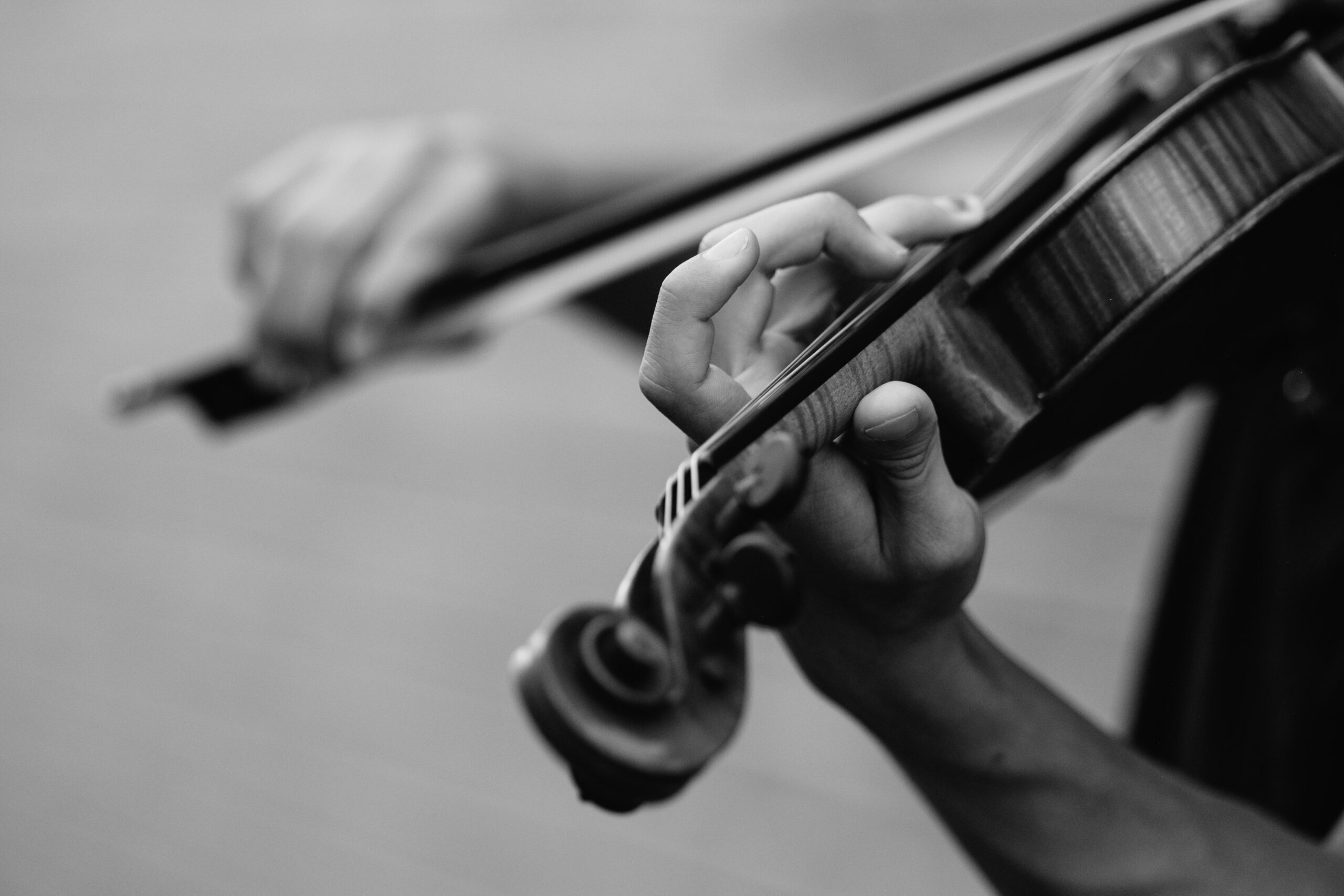
The woman’s Hypnos had fled shortly after her school began laying off teachers. The first to be dismissed had been the art instructors, then the chorus and band directors. She herself, a violin teacher, began to approach each administrative meeting with trepidation. In a school that valued only standardized test scores and math and science Olympiads, what defense was there for music?
Each night, she lay in bed, mind awake and churning with thoughts too fast to trace, impressions brief as a passing scent. Nonetheless, these thoughts and impressions seeded her blood with dread, embedded themselves in the tightness of her shoulders, the palpitations of her heart. She counted to ever larger numbers (five thousand, seven thousand fifty) and imagined ever plumper sheep in ever greener fields. She dutifully took deep breaths, expanding her chest and abdomen through the tightness that constricted them. Failing all else, she climbed out of bed, staring out the window as a midnight sky lightened to gray dawn and the mocking brightness of a new day.
Each morning, she poured herself a cup of coffee. One cup turned into two, then four. Her mind whirred with frantic activity and, when she felt she must go mad with the pressure of its contents, she visited a physician.
He was a pedigreed fellow with many diplomas. He asked her questions: how many cups of coffee did she drink? Four? My goodness! Was it any surprise she couldn’t sleep?
She stopped the coffee, trudged through each day fighting to keep her lids open. In the weeks that passed, the esteemed physician ran tests with names she didn’t remember, drew vials of blood until she grew dizzy at the quantity of tubes. The test results were ones that she did not understand, that the physician himself understood little better. Finally, the learned man in his learned white coat shrugged and scratched his learned white beard. He didn’t know; it was idiopathic. (She understood the joke only later: the doctor was an idiot, the patient pathetic.)
She turned to another doctor, who gave her medications to replace the sleep once granted by her Hypnos. The medications rendered her senseless at night, dulled her waking moments into amorphous gray. Music that had once moved her to tears, students who once lit her face with smiles – all these drowned in the haze that now obscured all shapes, all shades. There was a soul-deep despair in those moments, when joy itself curdled in the mouth. She realized with a shock that she could find no respite in the expanse of years before her, save oblivion: dark, seductive, final. Sharp steel against thin skin, a jump from a train platform, a bottle of pills downed with vodka.Such thoughts were pervasive, punishing, and they frightened her.
She stopped taking the medications. In the new clarity that surfaced, she resolved to seek her Hypnos. But to do so, she must face the creatures that guarded it.
That night, she brought her violin into the bedroom. In the darkness, the tide rose. Through the roiling images, the incoherent wailing in her mind, she clutched her violin, flotsam in a churning ocean. After months of near anesthesia, the sensations were shocking, ice water on sensitive skin. She wondered if her decision was a mistake – after all, plenty of people depended on soporifics when their Hypnoi failed. Then, she remembered the previous months: a lifeless life, a living death oscillating between agitated exhaustion and numbness.
The only way out was through. And it was too late to turn back.
The first monster emerged, molten and misshapen, a golem of glowing embers and blackened charcoal. A single, glowing eye marked the creature’s forehead. Smoke filled her bedroom, choking the air from her lungs, and she knew the monster to be Fear.
She will lose her job, it whispered. She will lose her apartment; she will be disgraced, pitied by former colleagues. She saw herself in line at a homeless shelter, gazes of passersby gliding over her. Parents pulled their children away and whispered to them to study hard or else end up like the poor, bedraggled thing in rags. The creature mocked her sleeplessness, taunting her with a life as an invalid, dependent on the whims of others; intolerably vulnerable. The horrors of her childhood resurfaced, sounds of crashing plates and screaming from the kitchen. She hid in her closet, head on her knees. If he came upstairs, he would beat her, and no one would care.
Terror seized her throat and she stumbled. Something hard pressed into her hip – her violin.
She lifted the instrument with shaking hands. She played hesitantly at first, then with desperation, a raw and ragged improvisation; not the virtuosic brilliance of a concert violinist, but a gasping search through madness. The notes coalesced into memories, tender as an infant’s cheek. Her grandmother’s soft embrace, the smell of warmth and baking bread. A classmate who reached out, invited her to a birthday sleepover, granting her respite from a single night at home; the music teacher who had surprised her at a violin recital with a gift. As she played, the floorboards melded together, hardening into a polished mirror, concave, reflecting the monster’s flame back on itself.
The creature burned. As the shadows receded, the tightness in her chest eased. The monster, she realized, was not so large as she thought.
I will return, it said. Its voice tasted of ash.
I know, she replied. She lowered the violin, watching as the last embers from the creature’s body crumbled.
Grief came next, slithering from the shadows. The top half of its body was human, skin pale as moonlight, hair black and slick as seaweed, a drowned woman who had been beautiful once. From the waist down was a snake’s tail. Its tears were fetid water; it smelled of stagnant ponds.
The creature’s voice was the gurgle of hidden streams. It sang of the woman’s grandparents, the only people who had loved her, held her through sorrow, now ashes scattered to the ocean. Its song traced years of loneliness, of toil at an instrument that had not led to a concert hall despite her efforts; of hours in a practice room, blistered fingertips and aching neck, hidden from the warmth of sunlight and friendships. It taunted her with the mocking half-smiles of her parents, the gleeful pity of acquaintances; with the shame of having aimed too high, of a fragile life lived in solitude, a woman aged before her time.
Through tears, the woman shouldered her violin. The new piece was quiet, its colors emerging cautiously as spring buds after a biting winter. It reminded them of the quiet joy of losing herself in music, of finding her spirit within its curves and dips, sounds and silences. In its textures was the bittersweet joy of student recitals, of hearing a passage that recalled her own unrealized dreams; of the exhausted face of her quartet’s violist, who had come to practice from the nursing home where his mother lay, squeezing time for music amidst the pain. She painted, in shades of sound, cracks that revealed light in dark places, broken pottery repaired with golden seams; the finite and fragile moments that made existence worth enduring.
She lifted the bow from the violin. Across the room, the creature lay in a deep crater that had formed in the floor, weeping tears that filled her prison. Her tears submerged her body, her torso, her head.
I will return, the creature gasped, and the waters closed over her.
I know, the woman whispered. Her eyes, blurred with tears, did not see the ripple of her breath across the water.
The last monster wore the form of the man she once loved. Its breath was a summer night’s breeze, its voice dangerous and alluring. Its name was Desire.
Her bedroom fell away and she stood in a concert hall, worn plaid pajamas replaced with a black gown of the finest silk, iridescent in the bright lights. She raised a hand to shield her eyes. The gown whispered against her skin, promising a life that might have been, a life the woman might still dwell in, if only in her mind.
She held a Stradivarius. Her own violin and bow lay at her feet. Beside her, at the conductor’s podium, Desire smiled, hands poised in front of the orchestra assembled to accompany her. If she looked out at the audience, she would see her grandparents, alive again. Her parents would be there too, proud in a way they had never been in life, and an audience of thousands, expectant and adoring, all waiting for her.
Here is all you have ever wanted, Desire whispered.
She looked down at her own violin. It was old, its varnish worn near the bridge. Sometimes, when the weather was humid, it whined and played out of tune. Sometimes, she wished for a new instrument, a life of lights and music, free of mindless frustrations and accumulating bills.
She faced the audience. There, her grandparents; beside them, her parents. Around them, thousands of people, their faces bland and featureless, and when she looked back at her grandparents again, their faces, too, had blurred in the manner of dreams: fleeting, beautiful, false.
With the care of a mother for her newborn, she lay down the Stradivarius. Then, she picked up her violin.
She played a simple tune – sweet, almost child-like. Sunrises before work from her apartment window, coffee in hand. The sullen face of a student, transformed with wonder and delight as he finally played through the Bach partita he had been struggling with; a picnic on a spring day with her string quartet, tart flavors of the cellist’s strawberry rhubarb pie in her mouth. Quiet nights listening to the radio, mug of chamomile tea in hand, feet propped on an old footstool as rain beat down on the windows outside.
She played, and her dress began to burn, oily black brightening to blinding white, then fading to dull orange. As the last sounds died, the remnants of the dress fell away from her warm skin.
Desire stepped down from the podium, eyes full of reproach.
Do you hate me so much, he asked. He took her hand, lowering his lips to her fingers.
She pulled them away, smiling sadly. Her limbs were heavy, but there was a sweetness to their weight, a lightness to her mind. She shook her head.
Once, she said softly, I loved you as hope, and you deceived me.
The lights dimmed; the stage faded away. Through the drawn curtains, the first rays of sunrise peeked into her bedroom.
She sat on the bed, skin cool in the still morning air. For the first time in months, she admired, rather than dreaded, the rose-tinted hues of dawn.
A flash of gold at the corner of her eye – once, twice – and drowsiness, deep and delicious, filled her mind and spread through her limbs. In the brief moment before sleep overtook her, she saw in the eyes of her Hypnos the expanse of night sky: vast, deep, eternal.