A few weeks ago, my league tennis team competed at the North Carolina State Championship. Twelve of us arrived in Raleigh in a steady stagger, played a dozen doubles matches in suffocating heat, laughed until we cried, then departed in a similarly haphazard manner, each with our own real-life obligations.
We lost almost every match. And the best I could tell, no one cared.
I have heard that tennis is one of only a handful of lifetime sports. I started playing at age ten and have had forty-five years to perfect the game. It was smalltown North Carolina in the 80s and I was the middle daughter of a gregarious mother and an incurably distracted father. My mom took the edge off the demands of raising three girls her way, playing bridge during the day and devouring romance novels late into the night. My father was a contractor who stayed busy making sure pipes were properly insulated.
Our family was far from sporty. My mom was a binge exerciser, occasionally appearing in a spandex leotard to watch Jane Fonda’s home workout on VHS. My father was known to sprint down Clear Creek Road in his signature Lucchese cowboy boots in training for the fall hunting season. A chief concern of my mom’s was that I read too much alone in my room, so when I developed the habit of hitting tennis balls against the garage doors, it was reasonably well-received. My dad asked only that I not leave ball marks. (I have wondered if this early timidity explains my weak strokes and faulty muscle memory).
Education and hard work were the hallmarks of my father’s worldview, and not much else mattered. He famously told us we should be thankful we were all “slightly above average intelligence.” Crushing as that was at the time, I grew to understand he meant we had adequate gray matter (as he called it) to be successful, without the burden of brilliance, which he felt practically guaranteed underachievement.
I learned the game at the Marion Community Building public courts near my cousin Lucy’s house. Like most kids of that era in rural America, we suffered from terminal boredom and were in constant search of suitable entertainment. Lucy and I biked down Viewpoint Drive, stopped off at Little Buck Grill for a basket of greasy fries, then took to the courts.
Chris Evert Lloyd was the darling of the sport, an athlete and a style icon. I remember watching her play in the 1981 Australian Open finals against Martina Navratilova, sitting cross-legged at the foot of my Uncle Charles’ club chair. Navratilova won in straight sets, but every point was hard-won. Evert’s rolled bangs and white-ribboned ponytail was my look for the next few years.
Though I began fairly early, mine has been a remarkably lackluster tennis career. My mediocrity in tennis has been a genuine struggle, because perfectionism is at the core of my personality, as is a reluctance to give up, to accept defeat, to leave a goal unfulfilled. Indeed, the sport has caused me immeasurable anguish. There are few things worse than a squandered lead, a lost tiebreaker, a blow out. Tennis lows are very low.
At some point, USTA league play became part of my regular routine. I have tried but can’t seem to let go of this ritual. League has been a rollercoaster: I have been bumped up a level, back down, back up again, then down again. At one early league match, my partner LeNoir and I arrived, tickled with ourselves in adorable tennis outfits. Lineups were exchanged and we met our opponents, two elderly women with every joint fitted with a brace. We were giddy.
Even the most novice tennis enthusiast understands that a twenty-minute match is not good. Our opponents didn’t need their braced joints, because the points were extremely short. I now know that when you play someone (dare I say, at my age) older and (dare I say, in my condition) less fit, you are probably going to get demolished. But those ladies were so dear, having humiliated us. They shook our hands, tapped racquets, and found something to compliment on our games. Lesson learned.
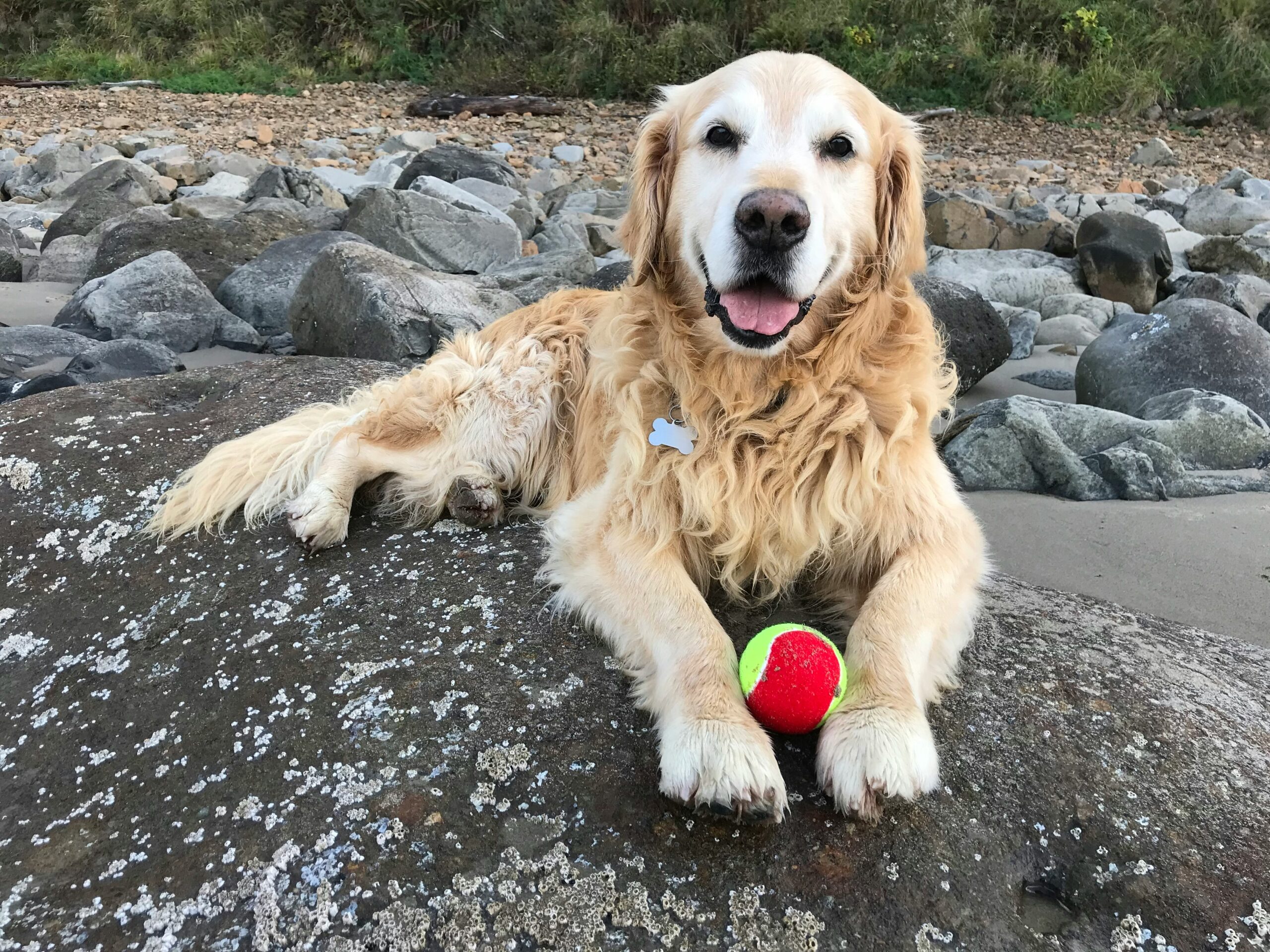
A tennis pro once called me the Golden Retriever of the game.
“You run all around and win points with sheer motion and determination,” he said.
“And that is. . . bad?” I asked. I had been playing for forty-ish years at this point and genuinely didn’t know.
“Everyone loves Golden Retrievers. They’re adorable,” he said. “But not the best role models for tennis.”
Ah, I didn’t think that was a compliment. I braced my tennis ego. My buddies stepped in instinctively, circling me in silent support.
“Don’t get me wrong, there’s no lack of effort,” he said. “But wouldn’t you like to not get so worn out running all around? Wouldn’t you like to have a few more skills in your basket? Wouldn’t you like to win more?”
For the bulk of my thirties, tennis was outright war. My self-confidence depended upon the swing of a few points and my tenacity was unmatched. I played in a snowstorm as my legs turned blue and on sweltering summer days, barely surviving without medical intervention. I was approaching a divorce, raising young girls, taking over my family’s business with no experience after my father’s death. Focusing on hitting balls at other women was more comfortable than facing my reality.
On countless occasions, I have demonstrated my dedication to my sport. When my boyfriend was fresh out of hernia surgery and heavily drugged, I dipped out, changed clothes in the hospital bathroom, and called my mom to pick him up on her way home from bridge club. All to avoid a forfeit. “You must be a serious player,” the nurse said without hiding her judgment.
I once departed New Orleans at 4 am and raced home, subsisting on convenience store food for eleven hours and barely drinking. I surreptitiously pulled on a sports bra and tank while driving and miraculously arrived just in time to be beaten by a pair of twenty-somethings in matching braids. Still I felt a profound sense of accomplishment. The next day, I was rushed into an emergency appendectomy. My sister told me later that, while high on morphine, my one request had been to text my captain that I would need a substitute for an upcoming match.
I have neglected my children for tennis. Once I lost my four-year-old daughter. My then-husband thought she was with me and drove to the courts. I had left home in a hurry for a clinic and assumed she was with him. That was a harrowing drive back home not knowing what we might find. (She was in her closet wearing headphones.)
The game has also brought me considerable joy. The crisp sound of a ball against strings is ingrained in my psyche. (Say what you will about the charms of pickleball, it’s pure cacophony.) I adore the rubbery aroma of balls fresh from the can. During Covid, we each brought our own balls and tracked them down between every point. Afterwards, we sat in folding camp chairs, six feet apart, and drank champagne from plastic cups. We lingered in the parking lot of the club like toddlers delaying bedtime, thankful for a relief from the heaviness. On the court, differences become irrelevant. A tennis partnership is an instant bond, if only for a few hours.
Still I have consistently underachieved. I established bad habits: poor follow-through, nervousness at the net, and a famously inconsistent serve. And in every single match to this day, I must say aloud “watch the ball” at least once. Most of my original tennis buddies have given up the game. Injuries, remarriages, grandkids and vacation homes have become their priorities. Even my beloved Chris Evert has struggled with health problems and personal challenges. (She dropped Lloyd two husbands ago.)
Though I advanced into the senior (over 55) league recently, I have moments of genius on the court. I still win points with sheer motion and determination. I continue to re-organize my tennis bag ad nauseam. I twirl around clockwise once when my serve is off, out of superstition (now it makes me dizzy). My knees hurt, my body aches. I am prone to heat exhaustion and suffer from chronic leg cramps. Foot surgery is scheduled for later this year.
Mediocrity appears to be my secret tennis weapon.
I’m not nervous anymore when I walk on the court and see a fit young woman sizing me up. I recognize the look in her eye, but I don’t want to be in her shoes. I am thankful for my tennis friendships, for my tennis journey, for my tennis maturity. My devotion to the game has been an invaluable distraction from the realities of growing up, raising my own children, and facing middle age.
My dad was right. I’m thankful to be slightly above average at tennis.
It’s okay to be a Golden Retriever.